

Onome Amuge
Lafarge Africa Plc, a prominent name in Nigeria’s building solutions sector, is making waves by championing the cause of persons with disabilities (PWDs). Often considered a largely untapped resource in the workforce, PWDs are now at the forefront of Lafarge’s latest initiative, particularly as the company commemorated the International Day of Persons with Disabilities. The highlight of this celebration was the launch of the Disability-to-Ability (D2A) Programme, conceived to nurture vocational and entrepreneurial skills essential for self-reliance among participants.
The D2A Programme, ambitiously themed “Ability Reimagined,” aims to train 100 individuals across four dynamic skill sets: laptop and phone repairs, beauty artistry including make-up and gele, wig and braids production, and shoe and bag crafting. Partnering with key stakeholders such as the Lagos State Employment Trust Fund (LSETF), the Lagos State Ministry of Youth and Social Development, and the Lagos State Office for Disability Affairs (LASODA), alongside notable advocates like Tunde Onakoya of Chess in Slums Africa, the programme embodies a blend of corporate social responsibility and a dedication to inclusive economic growth.
With a dual-hub framework operating from Ikeja in Lagos West and Ikorodu in Lagos East, the D2A Programme is structured to ensure accessibility for a broad demographic. This move reflects Lafarge’s commitment to inclusivity and stands as a testament to an emerging trend among Nigerian corporations—integrating social impact into their core business operations. Especially in a time when Environmental, Social, and Governance (ESG) considerations play a vital role in investor decisions, such initiatives signify significant progress.
Viola Graham-Douglas, Lafarge Africa’s director of communications, Public Affairs & Sustainable Development, articulated the essence of the D2A Programme at the event. She emphasized that this initiative transcends mere technical training by also offering mentorship, financial literacy, and entrepreneurial guidance, all curated in collaboration with LSETF. “We don’t just produce building solutions; we build society, homes, and empower people to be the best they possibly can be,” she stated, drawing attention to the intrinsic value of community development.
Moreover, the D2A Programme emphasizes not only skill acquisition but also the establishment of a new generation of micro-entrepreneurs ready to thrive in Nigeria’s informal economy, which accounts for over 60% of employment in the nation. By equipping PWDs with relevant skills, Lafarge is actively working to dismantle the structural barriers that have historically excluded disabled persons from both formal and informal employment avenues.
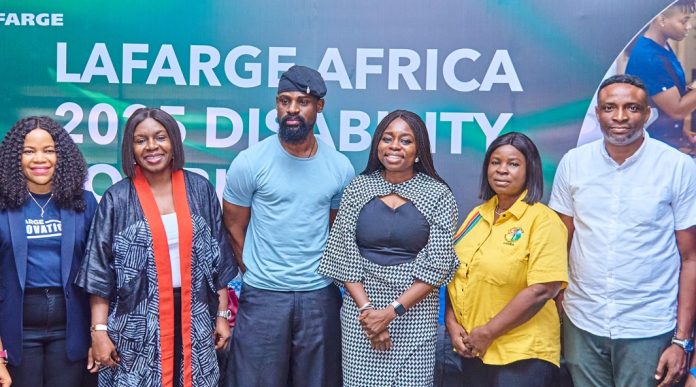
At the event, Tunde Onakoya, a Guinness World Record holder and passionate mentor on youth and disability inclusion, shared his inspiring personal journey with the participants. He highlighted how he overcame physical challenges by leveraging his love for chess and education to unlock international opportunities, encouraging attendees to recognize and apply their unique skills as assets. “Your skills are a blessing. Be diligent, believe in yourself, and use what you have to create value,” he urged, offering a motivating perspective on personal empowerment.
The presence of Lagos State officials at the gathering underscored the powerful public-private partnership driving the D2A Programme. Feyisayo Alayande, the executive secretary of LSETF, actively engaged participants through a speed mentoring session, providing practical insights on effective business management and entrepreneurial strategies. Similarly, Adekola Oluwafunmilayo, the director of monitoring and evaluation at LASODA, stressed the collective responsibility in building an inclusive society. “Building an inclusive society does not rest with government alone. It requires compassion, consistent effort, and partnership from every stakeholder,” she remarked, reinforcing the importance of collaborative efforts.
Furthermore, LASODA commended Lafarge and LSETF for their initiative in providing starter toolkits and assistance with business registration for graduates, crucial resources that enable immediate market engagement and lower entry barriers for PWD entrepreneurs. By fostering such resources, the initiative not only demonstrates a commitment to skill development but also actively combats the historical sidelining of disabled individuals in the workforce.


